
THE NAME GAME
I’ve Been Thinking About Brand Names All Week
This week I’ve been obsessed with brand naming.Not necessarily because I’ve been asked to name a brand.Quite the opposite.I’ve been between contracts, which is usually when my brain starts going off in all different directions.It starts inventing businesses.I’m sure other designers are the same.You see a product, spot a gap, notice an annoying problem or simply think:“I could make that better.”And then, almost immediately:“What would I call it?”And that’s where the fun starts.And then, about five minutes later, the hurdles start arriving.There’s already a company doing it.The domain is gone.The Instagram handle is gone.Someone has trademarked something similar.The market is saturated.Someone has raised £4m doing exactly this.Someone else has 200,000 followers.The packaging would cost a fortune.How would I manufacture it?How would I sell it?Would anyone actually buy it?And suddenly your brilliant little idea has turned into a 47-slide business plan you never asked for.But here’s the thing.As designers, we have a slightly ridiculous advantage.If you were starting a business tomorrow, one of the biggest chunks of work — the bit that many businesses have to pay someone else to do — is arguably already within your skill set.Strategy
↓
Positioning
↓
Naming
↓
Identity
↓
Packaging
↓
Art direction
↓
Website
↓
Content
↓
Campaign ideasThe starter kit for making the thing look like a real thing.So ask yourself:
What would you charge someone else to do all of that?£10k?
£20k?
£30k?
£40k?
£50k+?
Obviously, it depends massively on the business, scope, experience and quality of the work.But if you’re a designer capable of taking an idea from a blank sheet of paper to a credible brand ready to go into the world, you potentially have tens of thousands of pounds worth of creative capability sitting inside your own head.That doesn't mean you've magically created £30k of cash.But it does mean something interesting:you already possess a large part of the infrastructure required to turn an idea into something tangible.An entrepreneur might risk £30k, £50k or £100k of their savings to get a business to the point where it can launch.A designer can potentially contribute a significant amount of that creative and strategic value themselves.And that's a pretty powerful position to be in.I’m not saying starting a business is easy
Far from it.
Coming up with an idea is easy.
Coming up with an idea that solves a genuine problem, has a market, has the right timing, has the right economics, can be manufactured, distributed, marketed and ultimately make money?
That's a completely different game.
The numbers are sobering too.According to the Office for National Statistics, 38.4% of UK businesses born in 2019 survived for five years.So this isn't a “just quit your job and start a business” article.And I definitely don't think being a good designer automatically makes you a good entrepreneur.There are completely different skills involved.Sales.
Operations.
Finance.
Manufacturing.
Logistics.
Customer acquisition.
Hiring.
Cash flow.
Resilience.
And probably about 400 other things.But I do think designers sometimes underestimate how valuable our particular skill set can be when it's applied to our own ideas.Which brings me back to naming.Because this week I've been thinking about why some names just seem to click.5 names I’ve been thinking about
There are obviously thousands of great brand names.
These are just five that have caught my attention over the last few years because the name feels incredibly well matched to the world the brand has created.01 FUSSY
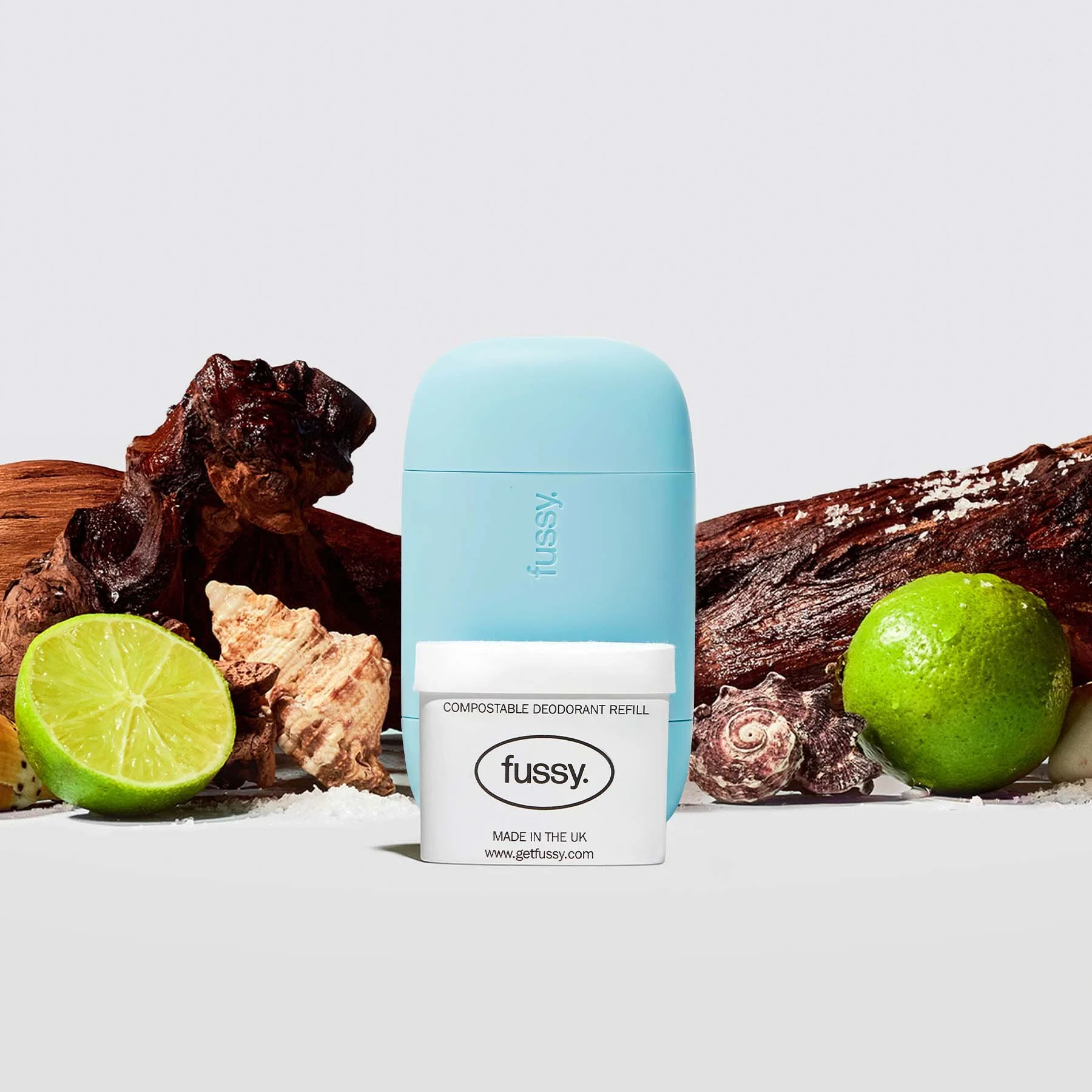
IMAGE SOURCE: FUSSY
Fussy is one of those names that makes you slightly annoyed that you didn't think of it first.
It's a simple everyday word.Nothing particularly exotic.But it works on multiple levels.The product is for people who are more particular about what they put on their bodies — ingredients, sustainability, plastic, performance etc.And yet the brand itself is deliberately unfussy.Short.Friendly.Memorable.A little bit cheeky.It doesn't sound like a traditional personal-care brand.And that gives it personality before you've even seen the packaging.That's what a great name can do.It starts the brand before the identity has even arrived.02 CADENCE
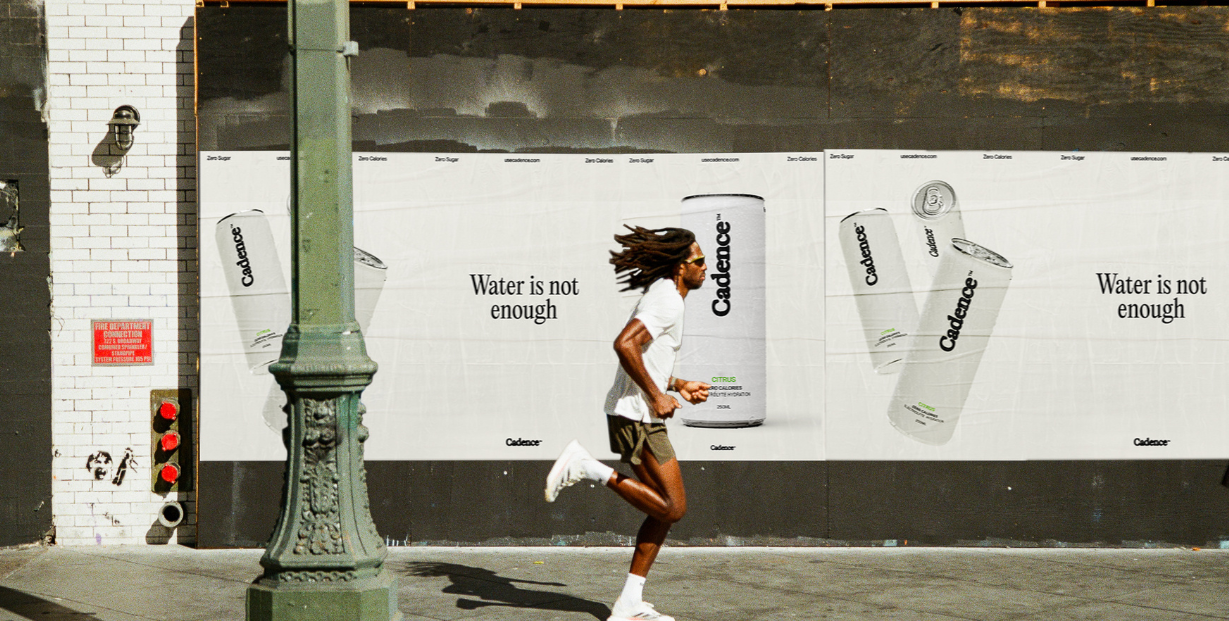
SOURCE: CADENCE
Cadence is a very different naming approach.
It comes from rhythm, pace and repetition.It's a word that feels connected to running/performance without screaming SPORTS BRAND.And that gives it a nice amount of sophistication and feels more lifestyle.The brand operates around hydration, fuelling, performance and daily discipline.So the word starts to make sense in the context of the product.Cadence.Something repeated.Something measured.Something that becomes a rhythm.It's a good example of an associative name, the name doesn't literally describe the product, but it connects to the behaviour or feeling surrounding it.03 HEIGHTS
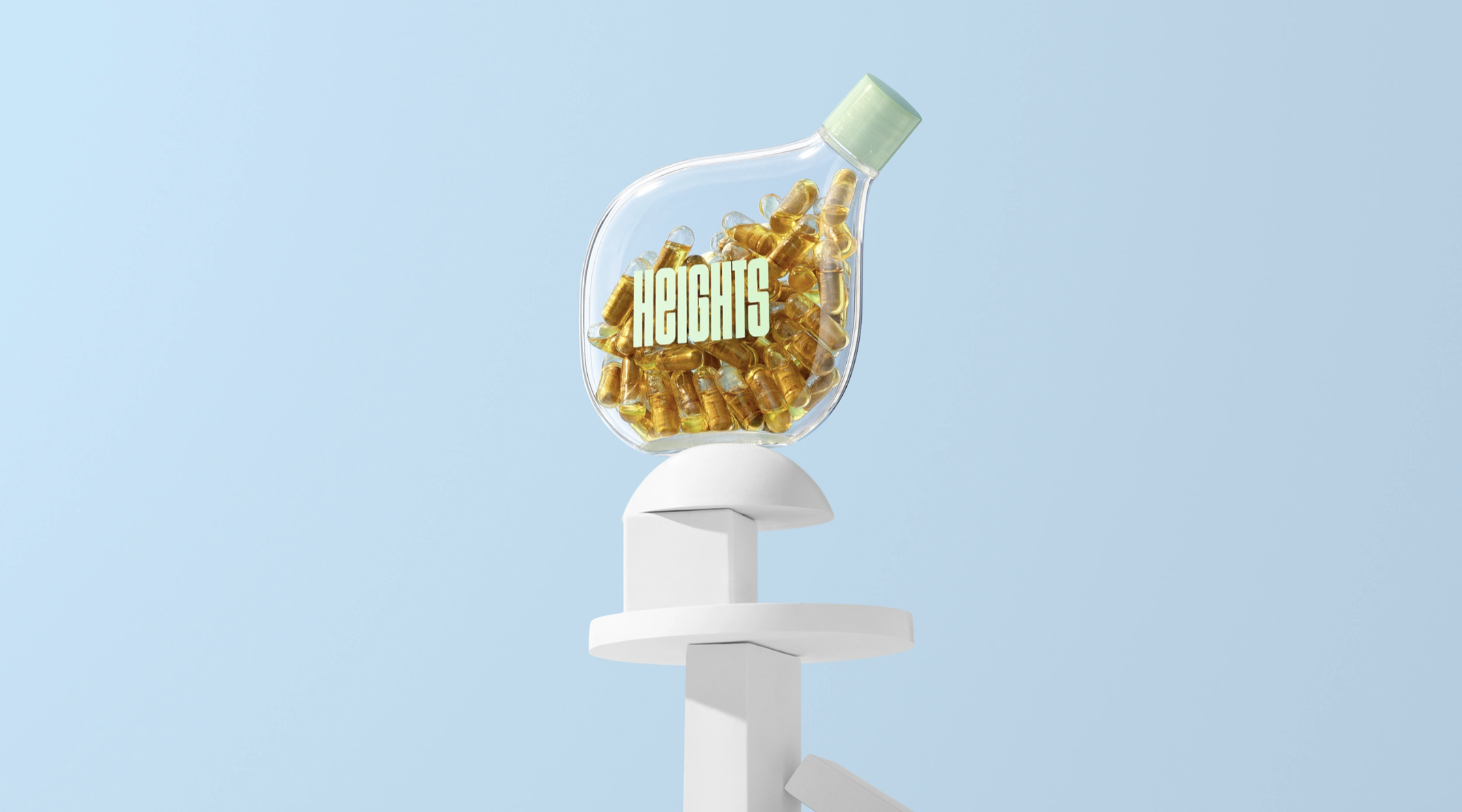
Source: HEIGHTS
I really like Heights.
It has ambition built into it.You can imagine climbing towards something.Getting better.Reaching another level.But it's also incredibly broad.The brand isn't literally selling mountains.It's selling supplements around brain, body and gut health.The name gives the brand somewhere to go.And that's an important characteristic of a good brand name.It shouldn't necessarily explain everything.Sometimes it should create enough space for the brand to build meaning around it.04 RAINS
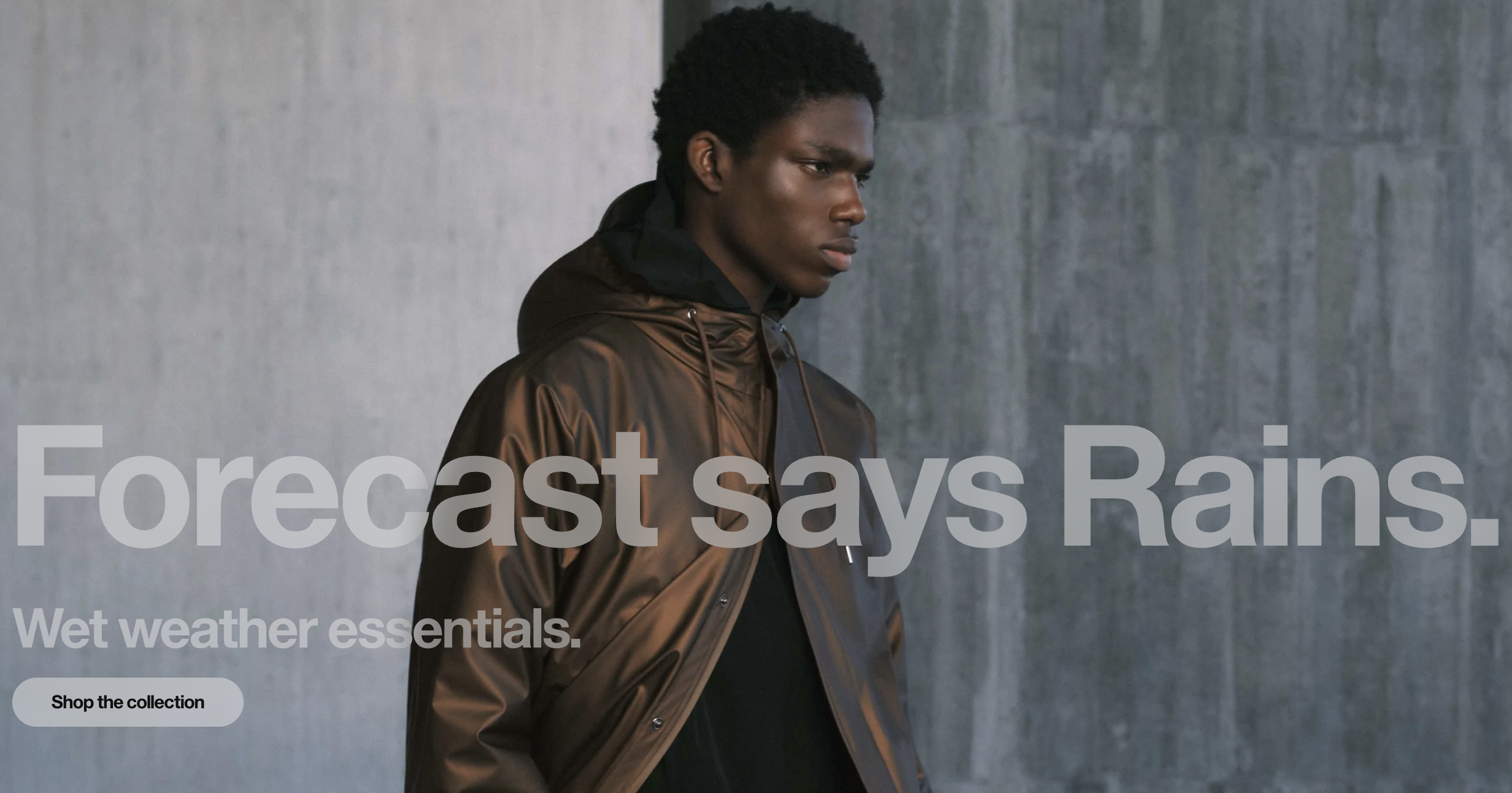
SOuRCE: RAINS
Then there's RAINS.
This one is has been around a while now and almost hilariously straightforward. How these brands managed to trademark and run with these names are incredible. Definitely not easy. What do you wear waterproof clothing for?Rain.But the execution makes it feel much more sophisticated than a literal descriptive name normally would.It's Scandinavian... but being from Scotland. I can relate!!Minimal.Functional.Weather-focused.The name immediately gives you a visual and emotional world.Grey skies.Wet pavements.Technical fabrics.Copenhagen.Architecture.Outerwear.And that's the interesting thing about naming:a simple word can become distinctive when the world around it is distinctive.
It may have started with Rain jackets, but now we 05 ACID RUNNING
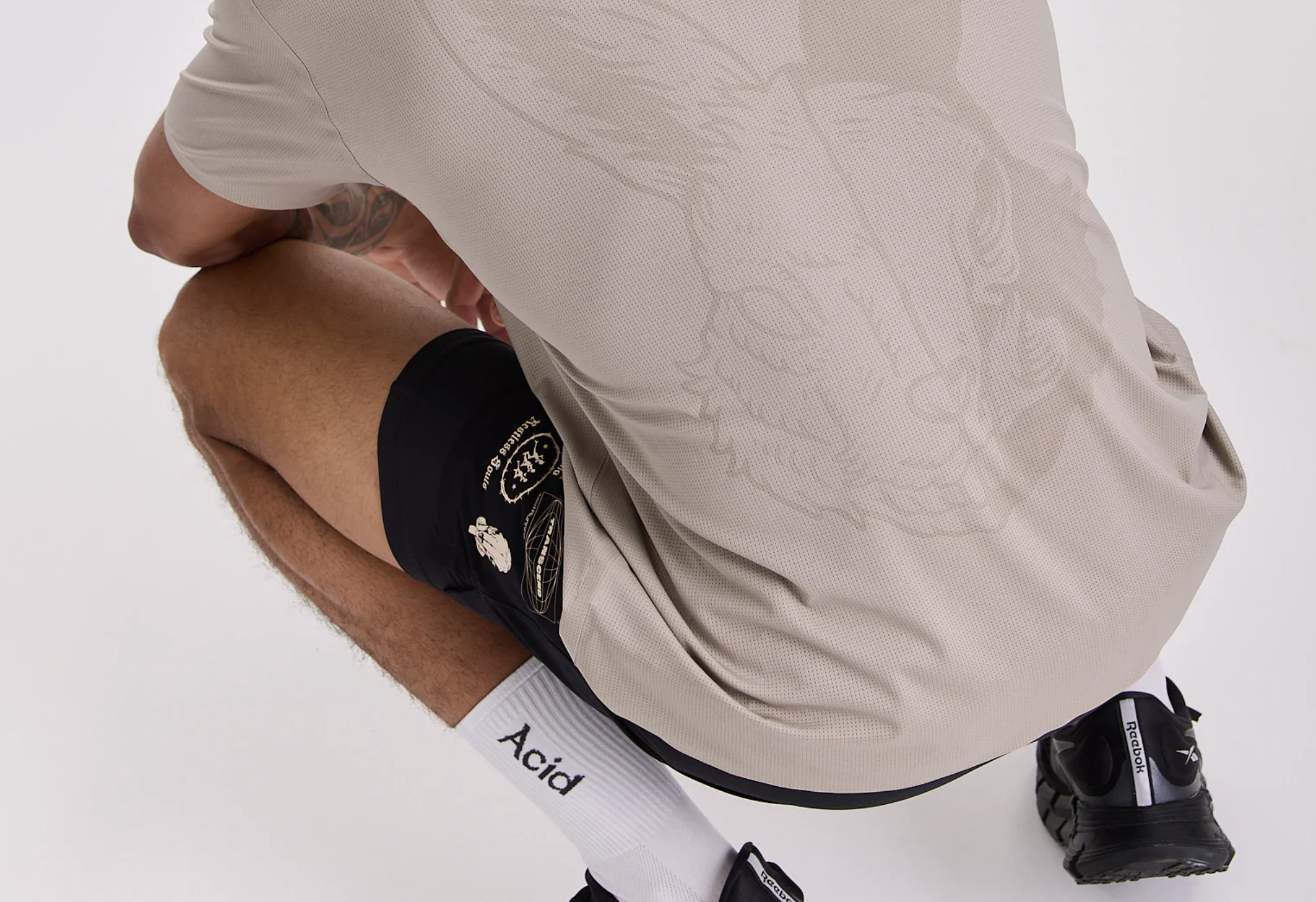
SOURCE: ACID RUNNING
And then there's ACID RUNNING.
This one takes a slightly more subcultural route.'Acid' immediately feels different from the usual running vocabulary.It has associations with chemistry, lactic acid, intensity, discomfort and something slightly rebellious.And that works beautifully with the idea that running isn't always about effortless wellness.Sometimes it's hard.Sometimes it hurts.Sometimes the suffering is part of the point.The name creates tension.ACID + RUNNING.
Two words that shouldn't necessarily feel like they belong together.Which is exactly why they work.So what actually makes a good brand name?This is where things get interesting.There isn't one formula.But there are some recurring naming territories.And understanding them can be really useful when you're trying to name something yourself.
They also exapnd on their brand name with things like 'HARE TECH' materials, tying things back to their brand mascot.THERE’s DIFFERENT TYPES OF BRAND NAMING
1. Descriptive names
These basically tell you what the business does.
THE NORTH FACE – interesting because It doesn't describe the product; it describes the world the brand belongs to.
CLASSPASS – class + access/pass. Very efficient naming.
Sweaty Betty – an unexpected phrase that tells you something about the attitude.
They're immediately understandable.The downside?They can be harder to own and differentiate.The upside?You don't have to explain them.2. Evocative names
These create a feeling rather than explaining the product.
Heights.
Patagonia.
Apple.
They give you a territory to build into.The name doesn't necessarily tell you what the product is.It tells you something about how the brand wants you to feel about it.3. Associative names
These sit somewhere between descriptive and abstract.
The word has a relationship with the product, behaviour or category but isn't literal.Cadence is a good example.So is Monzo.Neither tells you exactly what the company sells.But both create associations that can become powerful once the brand builds meaning around them.4. Metaphorical names
These borrow meaning from somewhere else.
Nike comes from the Greek goddess of victory.Jaguar uses an animal associated with speed, power and agility.Mustang does something similar.The product doesn't need to literally be the thing.The brand borrows its characteristics.5. Invented names
Sometimes you simply make something up.
Google (Inspired by googol is a real mathematical number: a 1 followed by 100 zeros)
Lego (comes from the two Danish words ‘leg godt’, which mean ‘play well’)
KODAK (A word invented out of thin air by the founders)
The obvious advantage is that you're not starting with all the existing meaning attached to a dictionary word.The disadvantage?You have to create the meaning yourself.Which can be both the hardest and most exciting part.6. Founder names
Sometimes the brand is simply a person's name.
Adidas came from Adi Dassler. Bonus fact, his brother Rudi Dassler later founder Puma.Disney comes from Walt Disney.RONNING comes from MAGNUS RONNING.There's nothing inherently wrong with naming something after yourself.In fact, when the founder has credibility, personality or a strong story, it can be incredibly powerful.7. Acronyms and abbreviations
This is the world of:
BBC - BRITISH BROADCASTING CENTER
BMW - Bayerische Motoren Werke (Bavarian Motor Works)
ASOS - As Seen On Screen
They can feel clean and ownable, particularly when the original name is long or complicated.But there's an important distinction:An acronym usually doesn't have much meaning until the brand gives it meaning.Which can be a good thing.8. Compound names
Take two existing words and smash them together.
Netflix - internet + FLicks (lol, I’m going down the pictures!)
PINTEREST - PIN + INTEREST
SPOTIFY - SPOT + IDENTIFY
It's an incredibly useful naming technique because you can create something that feels familiar while potentially creating something new.And sometimes the tension between the two words is the interesting bit.Which brings us back to:ACID RUNNING.And then there are the names that just… work
This is probably my favourite category.
The names where you see them and think:Of course.Not because they're necessarily clever.Not because there's some incredible hidden etymology.But because the relationship between the name, the product, the audience and the world around it feels inevitable.Fussy.
Cadence.
Heights.
Rains.
Acid Running.
They all create a slightly different kind of mental picture.And that's ultimately what I'm looking for when I'm naming something.Not necessarily a clever name.Not necessarily a unique word.Not necessarily something that nobody has ever heard before.I'm looking for a name that gives the brand somewhere to go.So, designers: why not try?
This is probably the biggest thing I've taken from obsessing over this stuff this week.
If you're a designer and you've ever thought:“I've got an idea for a business…”Maybe don't kill it immediately.Don't immediately Google the domain.Don't immediately search Instagram.Don't immediately discover that someone in Shoreditch has already raised £2m doing it.
Don't immediately tell your mate Buzz Killington!Give yourself a week or two.Come up with names of a type of business your interested in.Build a proposition that aligns.Create some sketches or designs.Expand on the brand world.See what happens.Because maybe the idea is terrible, maybe it's great.Fine.You might learn something and you can take those thoughts or lessons into conversations with founders or with your teams on the projects your working on.Maybe somebody else is already doing it.Fine.You might discover why.Maybe you realise you don't actually want to run a business and then it becomes a new folio piece.Also fine.But maybe, just maybe, you stumble across something!And if you're a designer, you have an unusual opportunity to explore that something further because you can visualise it.You can make the invisible visible.That's one of the most valuable things we do.And perhaps we should use that ability on ourselves a little more often.
Especially if your a freelance designer who find's the odd week or two here and there in between contracts. What's the worst that can happen? A new folio piece that might attract a founder from that industry and you're now going into that project with some findings and insights rather than a standing start.Because somewhere between “I've got an idea” and “this is a real business” is a huge gap.But as designers, we're already pretty good at crossing those bridges.We just usually do it for someone else.
